
2020 Chateau Lassegue
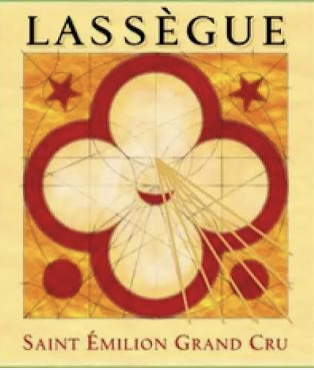
The 2020 Château Lassègue is a polished Right Bank Bordeaux from Saint-Émilion, produced by Château Lassègue, a historic hillside estate whose origins date back to the 18th century and which entered a new era of quality after its acquisition in 2003 by Jess Jackson and Barbara Banke of Jackson Family Wines. The vineyards sit on prized clay-limestone slopes with varied exposures that allow for optimal ripening, and they are planted primarily to Merlot with supporting Cabernet Franc and Cabernet Sauvignon, a classic blend that yields wines combining richness, structure, and aromatic complexity. Crafted under a philosophy that blends modern precision with traditional Bordeaux techniques, the 2020 vintage shows ripe blackberry, plum, cocoa, and floral notes layered over fine tannins and mineral freshness, resulting in a wine that is approachable in youth yet structured enough for long aging, reflecting both the estate’s historic terroir and its contemporary refinement.
- $74.99
- $48.00
2020 Chateau Lassegue
The 2020 Château Lassègue is a polished Right Bank Bordeaux from Saint-Émilion, produced by Château Lassègue, a historic hillside estate whose origins date back to the 18th century and which entered a new era of quality after its acquisition in 2003 by Jess Jackson and Barbara Banke of Jackson Family Wines. The vineyards sit on prized clay-limestone slopes with varied exposures that allow for optimal ripening, and they are planted primarily to Merlot with supporting Cabernet Franc and Cabernet Sauvignon, a classic blend that yields wines combining richness, structure, and aromatic complexity. Crafted under a philosophy that blends modern precision with traditional Bordeaux techniques, the 2020 vintage shows ripe blackberry, plum, cocoa, and floral notes layered over fine tannins and mineral freshness, resulting in a wine that is approachable in youth yet structured enough for long aging, reflecting both the estate’s historic terroir and its contemporary refinement.
$74.99
- 750 ML
2019 Chateau Leoville Las Cases
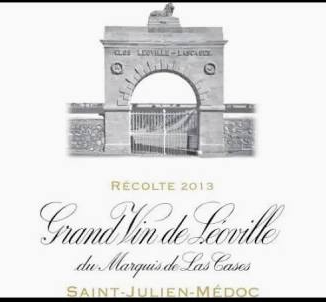
The 2019 Château Léoville Las Cases is a benchmark Left Bank Bordeaux from Saint-Julien, produced by the historic Château Léoville Las Cases, one of the Médoc’s most revered Second Growth estates and widely regarded for First Growth–level quality. The property traces its origins to the 17th century and is overseen today by proprietor Jean-Hubert Delon, whose family has guided the estate for generations with a philosophy rooted in meticulous vineyard work and traditional winemaking. The vineyard sits on deep gravel soils near the Gironde estuary, planted predominantly to Cabernet Sauvignon with Merlot and Cabernet Franc, a blend that gives the wine its hallmark structure, depth, and longevity. The 2019 vintage from Bordeaux is considered outstanding, and this bottling shows dense blackcurrant, graphite, cedar, and spice layered over firm yet refined tannins, delivering a powerful but impeccably balanced wine built to age for decades and exemplifying the château’s reputation for precision, intensity, and aristocratic elegance.
- $289.99
- $207.00
2019 Chateau Leoville Las Cases
The 2019 Château Léoville Las Cases is a benchmark Left Bank Bordeaux from Saint-Julien, produced by the historic Château Léoville Las Cases, one of the Médoc’s most revered Second Growth estates and widely regarded for First Growth–level quality. The property traces its origins to the 17th century and is overseen today by proprietor Jean-Hubert Delon, whose family has guided the estate for generations with a philosophy rooted in meticulous vineyard work and traditional winemaking. The vineyard sits on deep gravel soils near the Gironde estuary, planted predominantly to Cabernet Sauvignon with Merlot and Cabernet Franc, a blend that gives the wine its hallmark structure, depth, and longevity. The 2019 vintage from Bordeaux is considered outstanding, and this bottling shows dense blackcurrant, graphite, cedar, and spice layered over firm yet refined tannins, delivering a powerful but impeccably balanced wine built to age for decades and exemplifying the château’s reputation for precision, intensity, and aristocratic elegance.
$289.99
- 750 ML
1998 Chateau La Mondotte
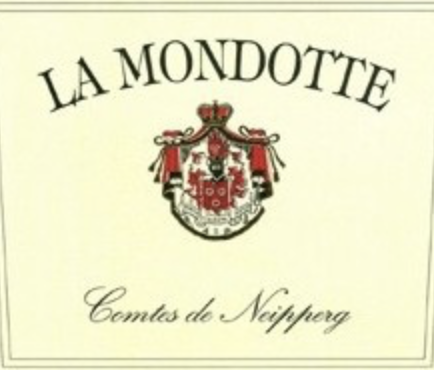
The 1998 Château La Mondotte is a powerful yet refined Right Bank Bordeaux from Saint-Émilion, produced by Château La Mondotte, a tiny, elite estate owned by Stephan von Neipperg and part of his family’s portfolio that also includes Château Canon-la-Gaffelière. The vineyard covers only about 4.5 hectares on a high limestone plateau with clay soils, a terroir known for producing intensely concentrated wines with strong structure and aging potential. The estate rose to global fame in the late 1990s after receiving critical acclaim for its richly textured, modern style, becoming one of the so-called “garage wines” that helped redefine Saint-Émilion’s reputation for small-production luxury bottlings. Typically a blend dominated by Merlot with a significant portion of Cabernet Franc, the 1998 vintage shows dense dark fruit, espresso, truffle, and mineral notes with firm yet polished tannins, illustrating both the power of the vintage and the château’s signature style of depth, precision, and longevity.
- $299.99
- $95.00
1998 Chateau La Mondotte
The 1998 Château La Mondotte is a powerful yet refined Right Bank Bordeaux from Saint-Émilion, produced by Château La Mondotte, a tiny, elite estate owned by Stephan von Neipperg and part of his family’s portfolio that also includes Château Canon-la-Gaffelière. The vineyard covers only about 4.5 hectares on a high limestone plateau with clay soils, a terroir known for producing intensely concentrated wines with strong structure and aging potential. The estate rose to global fame in the late 1990s after receiving critical acclaim for its richly textured, modern style, becoming one of the so-called “garage wines” that helped redefine Saint-Émilion’s reputation for small-production luxury bottlings. Typically a blend dominated by Merlot with a significant portion of Cabernet Franc, the 1998 vintage shows dense dark fruit, espresso, truffle, and mineral notes with firm yet polished tannins, illustrating both the power of the vintage and the château’s signature style of depth, precision, and longevity.
$299.99
- 750 ML
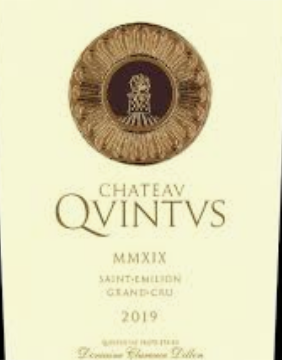
2019 Chateau Quintus
The 2019 Château Quintus is a polished Right Bank Bordeaux from the limestone plateau of Saint‑Émilion, produced by Château Quintus, a modern estate established in 2011 when the Dillon family—owners of Château Haut‑Brion and Château La Mission Haut‑Brion—acquired and merged historic vineyards on the site. Named after the Roman tradition of giving a fifth child the name Quintus, the estate represents the family’s fifth wine property and reflects their philosophy of precision viticulture and refined winemaking. The 2019 vintage is typically a Merlot-dominant blend supported by Cabernet Franc, grown on clay-limestone soils that lend structure and mineral freshness. In style it is rich yet elegant, offering layers of dark fruit, violet, cocoa, and subtle spice with fine tannins and long aging potential, illustrating both the pedigree of its ownership and the modern refinement of contemporary Saint-Émilion wines.
- $129.99
- $90.00
2019 Chateau Quintus
The 2019 Château Quintus is a polished Right Bank Bordeaux from the limestone plateau of Saint‑Émilion, produced by Château Quintus, a modern estate established in 2011 when the Dillon family—owners of Château Haut‑Brion and Château La Mission Haut‑Brion—acquired and merged historic vineyards on the site. Named after the Roman tradition of giving a fifth child the name Quintus, the estate represents the family’s fifth wine property and reflects their philosophy of precision viticulture and refined winemaking. The 2019 vintage is typically a Merlot-dominant blend supported by Cabernet Franc, grown on clay-limestone soils that lend structure and mineral freshness. In style it is rich yet elegant, offering layers of dark fruit, violet, cocoa, and subtle spice with fine tannins and long aging potential, illustrating both the pedigree of its ownership and the modern refinement of contemporary Saint-Émilion wines.
$129.99
- 750 ML
1983 Chateau Leoville Barton
The 1983 Château Léoville Barton is a classic Saint-Julien Bordeaux from an estate founded over three centuries ago and still run by the Barton family, now in its tenth generation, with vineyards overlooking the Gironde River. The property is known for traditional viticulture, including plowing rows and avoiding herbicides, and its gravel-and-clay soils help produce structured, age-worthy wines. The vineyard plantings are typically about 74% Cabernet Sauvignon, 23% Merlot, and 3% Cabernet Franc, giving the blend its hallmark balance of power and elegance. In tastings, the 1983 vintage has been praised for subtlety and finesse, showing complex notes of tobacco, plum, and berries with a silky yet full-bodied texture—an excellent example of mature Left Bank Bordeaux.
- $249.99
- $155.00
1983 Chateau Leoville Barton
The 1983 Château Léoville Barton is a classic Saint-Julien Bordeaux from an estate founded over three centuries ago and still run by the Barton family, now in its tenth generation, with vineyards overlooking the Gironde River. The property is known for traditional viticulture, including plowing rows and avoiding herbicides, and its gravel-and-clay soils help produce structured, age-worthy wines. The vineyard plantings are typically about 74% Cabernet Sauvignon, 23% Merlot, and 3% Cabernet Franc, giving the blend its hallmark balance of power and elegance. In tastings, the 1983 vintage has been praised for subtlety and finesse, showing complex notes of tobacco, plum, and berries with a silky yet full-bodied texture—an excellent example of mature Left Bank Bordeaux.
$249.99
- 750 ML
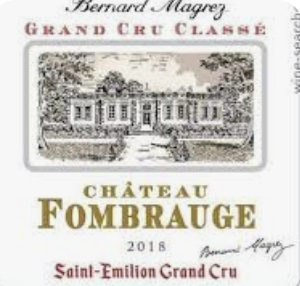
2018 Chateau Fombrauge Grand Cru
The 2018 Château Fombrauge Grand Cru comes from one of Saint-Émilion’s historic estates, with written records dating back to the period just after the Hundred Years’ War. The property later became a quality-focused pioneer in the region and was ultimately acquired in 1999 by Bernard Magrez, who modernized the winery alongside renowned consultant Michel Rolland. Today the estate spans roughly 60 hectares of clay-limestone soils with fossil-rich “starfish limestone,” prized for drainage and mineral expression, and it earned official Grand Cru Classé status in 2012 after major investment in vineyard and cellar technology. The vineyard is planted predominantly to Merlot supported by Cabernet Franc and Cabernet Sauvignon, a classic Right Bank blend that produces structured yet polished wines with aging potential.
- $55.00
- $34.00
2018 Chateau Fombrauge Grand Cru
The 2018 Château Fombrauge Grand Cru comes from one of Saint-Émilion’s historic estates, with written records dating back to the period just after the Hundred Years’ War. The property later became a quality-focused pioneer in the region and was ultimately acquired in 1999 by Bernard Magrez, who modernized the winery alongside renowned consultant Michel Rolland. Today the estate spans roughly 60 hectares of clay-limestone soils with fossil-rich “starfish limestone,” prized for drainage and mineral expression, and it earned official Grand Cru Classé status in 2012 after major investment in vineyard and cellar technology. The vineyard is planted predominantly to Merlot supported by Cabernet Franc and Cabernet Sauvignon, a classic Right Bank blend that produces structured yet polished wines with aging potential.
$55.00
- 750 ML
1989 Chateau Sociando-Mallet Cuvee Jean Gautreau
The 1989 Château Sociando-Mallet “Cuvée Jean Gautreau” is a classic mature Bordeaux from the Haut-Médoc appellation, produced by a historic estate whose roots trace back to 1633, when the land belonged to a Basque aristocrat named Sociondo. The modern reputation of the winery is largely due to winemaker and owner Jean Gautreau, a former tennis standout turned wine merchant who purchased the neglected property in 1969, rebuilt its cellars, expanded vineyards from just a few hectares to more than 80, and transformed it into one of the Médoc’s most respected unclassified estates. In 1995 he created the special Cuvée Jean Gautreau, typically made with a higher proportion of Cabernet Sauvignon than the main wine, showcasing the estate’s gravel-and-clay terroir and its capacity for long aging. The house style is traditionally structured and full-bodied, built from classic Bordeaux varieties—generally Cabernet Sauvignon, Merlot, and Cabernet Franc—with blends often around roughly half Merlot and half Cabernet Sauvignon plus a small percentage of Cabernet Franc. Known for dark fruit aromas, minerality, and firm tannins that soften beautifully with age, mature vintages like 1989 highlight the estate’s reputation for producing powerful yet elegant wines that reward long cellaring.
- $139.99
- $73.00
1989 Chateau Sociando-Mallet Cuvee Jean Gautreau
The 1989 Château Sociando-Mallet “Cuvée Jean Gautreau” is a classic mature Bordeaux from the Haut-Médoc appellation, produced by a historic estate whose roots trace back to 1633, when the land belonged to a Basque aristocrat named Sociondo. The modern reputation of the winery is largely due to winemaker and owner Jean Gautreau, a former tennis standout turned wine merchant who purchased the neglected property in 1969, rebuilt its cellars, expanded vineyards from just a few hectares to more than 80, and transformed it into one of the Médoc’s most respected unclassified estates. In 1995 he created the special Cuvée Jean Gautreau, typically made with a higher proportion of Cabernet Sauvignon than the main wine, showcasing the estate’s gravel-and-clay terroir and its capacity for long aging. The house style is traditionally structured and full-bodied, built from classic Bordeaux varieties—generally Cabernet Sauvignon, Merlot, and Cabernet Franc—with blends often around roughly half Merlot and half Cabernet Sauvignon plus a small percentage of Cabernet Franc. Known for dark fruit aromas, minerality, and firm tannins that soften beautifully with age, mature vintages like 1989 highlight the estate’s reputation for producing powerful yet elegant wines that reward long cellaring.
$139.99
- 750 ML
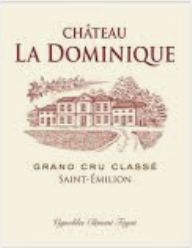
1986 Chateau La Dominique
The 1986 Château La Dominique is a structured and age-worthy Saint-Émilion Grand Cru Classé from an estate with roots dating back to the 16th century, situated on prime clay and gravel soils bordering Pomerol, adjacent to celebrated neighbors such as Château Cheval Blanc and Château Figeac. Owned for many years by the Fayat family, La Dominique has long been recognized for producing wines that balance Right Bank richness with notable backbone and aging potential. The 1986 vintage in Bordeaux was marked by a warm summer followed by a dry September, resulting in thick-skinned grapes with firm tannins and excellent structure—particularly favorable for Cabernet varieties. The blend typically centers on Merlot (around 70–80%), supported by Cabernet Franc and a meaningful portion of Cabernet Sauvignon, which contributes to the wine’s firm framework and longevity. Aged in French oak barrels, the 1986 La Dominique displays classic notes of blackcurrant, plum, cedar, tobacco, and earthy spice, with a muscular tannic profile that has softened gracefully over decades. While often overshadowed by the more opulent 1982 vintage, 1986 is revered by traditionalists for its power and classicism, and La Dominique’s proximity to Pomerol lends it a subtle richness that complements the vintage’s hallmark structure, making it a compelling and historically significant expression of mature Right Bank Bordeaux.
- $199.99
- $95.41
1986 Chateau La Dominique
The 1986 Château La Dominique is a structured and age-worthy Saint-Émilion Grand Cru Classé from an estate with roots dating back to the 16th century, situated on prime clay and gravel soils bordering Pomerol, adjacent to celebrated neighbors such as Château Cheval Blanc and Château Figeac. Owned for many years by the Fayat family, La Dominique has long been recognized for producing wines that balance Right Bank richness with notable backbone and aging potential. The 1986 vintage in Bordeaux was marked by a warm summer followed by a dry September, resulting in thick-skinned grapes with firm tannins and excellent structure—particularly favorable for Cabernet varieties. The blend typically centers on Merlot (around 70–80%), supported by Cabernet Franc and a meaningful portion of Cabernet Sauvignon, which contributes to the wine’s firm framework and longevity. Aged in French oak barrels, the 1986 La Dominique displays classic notes of blackcurrant, plum, cedar, tobacco, and earthy spice, with a muscular tannic profile that has softened gracefully over decades. While often overshadowed by the more opulent 1982 vintage, 1986 is revered by traditionalists for its power and classicism, and La Dominique’s proximity to Pomerol lends it a subtle richness that complements the vintage’s hallmark structure, making it a compelling and historically significant expression of mature Right Bank Bordeaux.
$199.99
- 750 ML
2000 Chateau Monbousquet
he 2000 Château Monbousquet is a bold and modern expression of Saint-Émilion from an estate whose history dates back to the 16th century, though it rose to international prominence after Gérard Perse purchased and revitalized the property in 1993. Located on the limestone and clay slopes near the border of Pomerol, Monbousquet was elevated to Grand Cru Classé status in 2006, reflecting the dramatic improvements in quality under Perse’s direction. The celebrated 2000 vintage—widely regarded as one of Bordeaux’s finest at the turn of the millennium—benefited from ideal growing conditions, producing ripe, concentrated fruit. The blend typically features a high proportion of Merlot (around 60%), complemented by Cabernet Franc (approximately 30%) and a notable amount of Cabernet Sauvignon (around 10%), which is relatively uncommon on the Right Bank and contributes additional structure and aging potential. Aged in a high percentage of new French oak, the 2000 Monbousquet is opulent and full-bodied, offering layers of blackberry liqueur, plum, espresso, chocolate, and spice, supported by velvety tannins and impressive length. The wine became something of a cult favorite, earning high praise from critics including Robert Parker, and is often cited as a defining example of the “modern” Saint-Émilion style—rich, powerful, and hedonistic—while still maintaining the limestone-driven freshness characteristic of its terroir.
- $149.99
- $95.00
2000 Chateau Monbousquet
he 2000 Château Monbousquet is a bold and modern expression of Saint-Émilion from an estate whose history dates back to the 16th century, though it rose to international prominence after Gérard Perse purchased and revitalized the property in 1993. Located on the limestone and clay slopes near the border of Pomerol, Monbousquet was elevated to Grand Cru Classé status in 2006, reflecting the dramatic improvements in quality under Perse’s direction. The celebrated 2000 vintage—widely regarded as one of Bordeaux’s finest at the turn of the millennium—benefited from ideal growing conditions, producing ripe, concentrated fruit. The blend typically features a high proportion of Merlot (around 60%), complemented by Cabernet Franc (approximately 30%) and a notable amount of Cabernet Sauvignon (around 10%), which is relatively uncommon on the Right Bank and contributes additional structure and aging potential. Aged in a high percentage of new French oak, the 2000 Monbousquet is opulent and full-bodied, offering layers of blackberry liqueur, plum, espresso, chocolate, and spice, supported by velvety tannins and impressive length. The wine became something of a cult favorite, earning high praise from critics including Robert Parker, and is often cited as a defining example of the “modern” Saint-Émilion style—rich, powerful, and hedonistic—while still maintaining the limestone-driven freshness characteristic of its terroir.
$149.99
- 750 ML